Showing posts with label Articles. Show all posts

Sunday, 27 January 2013

Venezuelan Book Mobile


 It took awhile for this article to make its way around the web, but I think it is great!! 

I grew up in a rural area with the closest library being in my school, almost 45 km away, and closed in the summer. I took advantage of the University of Manitoba's extension library. Selections were made from a catalogue and mailed to you in a canvas bag. It was wonderful!
 If the link doesn't work, here is the story.

Last Updated: Saturday, 4 August 2007, 10:20 GMT 11:20 UK
Venezuela's four-legged mobile libraries
A university in Venezuela is using a novel method to take books into remote communities and encourage people to read. As James Ingham reports, the scheme is proving a great success.
The village children love reading the books that the mules bring

Chiquito and Cenizo greet me with a bit of a snort and a flick of the tail.
Mules are too tough to bother being sweet. They do a hard job which no other animal or human invention can do as well.
But these mules are rather special.
They are known as bibliomulas (book mules) and they are helping to spread the benefits of reading to people who are isolated from much of the world around them.
My trek started from the Valley of Momboy in Trujillo, one of Venezuela's three Andean states.
These are the foothills of the Andes but they are high enough, especially when you are walking.
Slow but steady
The idea of loading mules with books and taking them into the mountain villages was started by the University of Momboy, a small institution that prides itself on its community-based initiatives and on doing far more than universities in Venezuela are required to do by law.

Spreading the joy of reading is our main aim
Christina Vieras, project leader
Accompanying us was local guide Ruan who knows a thing or two about mules.
He was their boss, cajoling them carefully as they started up the hill at a slow-but-steady, no-nonsense plod.
The deeply rutted, dry and dusty path snaked its way up. The sun beat on the back of my neck.
We were all breathless, apart from Ruan.
Diving for books
A break came when it was my turn to ride a mule. I enjoyed a great view of the valley but held on tight as Chiquito veered close to the edge.

Map of Venezuela
Hot and slightly bothered after two hours, we reached Calembe, the first village on this path.
Anyone who was not out working the fields - tending the celery that is the main crop here - was waiting for our arrival. The 23 children at the little school were very excited.
"Bibilomu-u-u-u-las," they shouted as the bags of books were unstrapped. They dived in eagerly, keen to grab the best titles and within minutes were being read to by Christina and Juana, two of the project leaders.
"Spreading the joy of reading is our main aim," Christina Vieras told me.
"But it's more than that. We're helping educate people about other important things like the environment. All the children are planting trees. Anything to improve the quality of life and connect these communities."
Internet plans
As the project grows, it is using the latest technology.

Mountain children reading
I love reading books and we get told some really nice stories
Jose Castillo
12 years old
Somehow there is already a limited mobile phone signal here, so the organisers are taking advantage of that and equipping the mules with laptops and projectors.
The book mules are becoming cyber mules and cine mules.
"We want to install wireless modems under the banana plants so the villagers can use the internet," says Robert Ramirez, the co-ordinator of the university's Network of Enterprising Rural Schools.
"Imagine if people in the poor towns in the valley can e-mail saying how many tomatoes they'll need next week, or how much celery.
"The farmers can reply telling them how much they can produce. It's blending localisation and globalisation."
Local enthusiasm
The book mule team played noisy games with the children, listened to them read and lunched with the adults, discussing over a hearty soup and corn bread how the community can develop the scheme.

This four-legged mobile library is not just keeping this place alive but making it thrive
One idea was using the mules to transport medicines which can be so hard to get hold of here.
Everyone I spoke to - both adults and children - was full of enthusiasm.
"It's great," said 12-year-old Jose Castillo. "I love reading books and we get told some really nice stories."
Looking up from reading her book about Harry the cat and his trip to the vet, Gesenae Guerdo told me she loved reading too.
"We share a lot of these books," she said.
Javier Sulveran, a young, bright man in his twenties, tells me that the village is very supportive of the project:
"The children are really motivated to read and we are too. A lot of the adults are reading more. It's great that they come up here."
The university has acquired a new mule. They are going to keep it in Calembe under the care of the locals, something Javier really approved of.
The mule will be able to get further into the mountains and spread the word to more villages that so far remain too remote.
With fond farewells we left Calembe behind. It was clear I was leaving a place with a strong sense of community.
This four-legged mobile library is not just keeping this place alive but making it thrive.
From Our Own Correspondent was broadcast on Saturday, 4 August, 2007 at 1130 BST on BBC Radio 4. Please check the programme schedules for World Service transmission times.

Monday, 26 July 2010

Little Houses

The following article was published in the Winnipeg Free Press on Saturday. I have always loved small places and some of the houses mentioned in the associated websites are just adorable. Of course, to have them work in this city, they would have to have some serious insulation and a space to put the furnace, and a small entryway would be advantageous as opening the door in January would cool off the whole place.
And as long as I had room for my books and a place to sew.....

Living large ... in a small house

Enlarge Image Enlarge Image icon

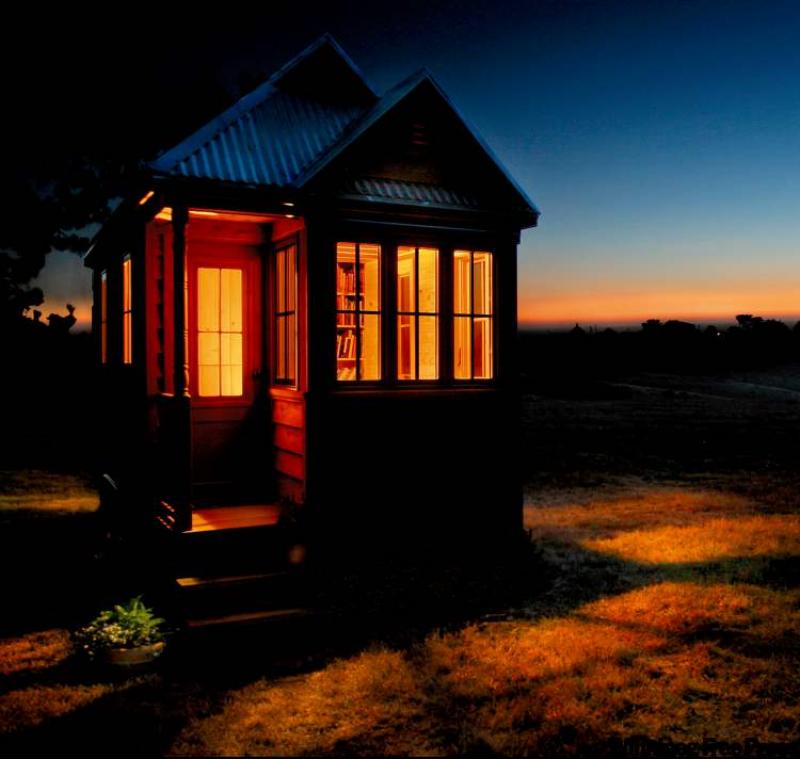
Wee homes are courtesy of inventive brains in Boyes Hot Springs, California.

Enlarge Image Enlarge Image icon

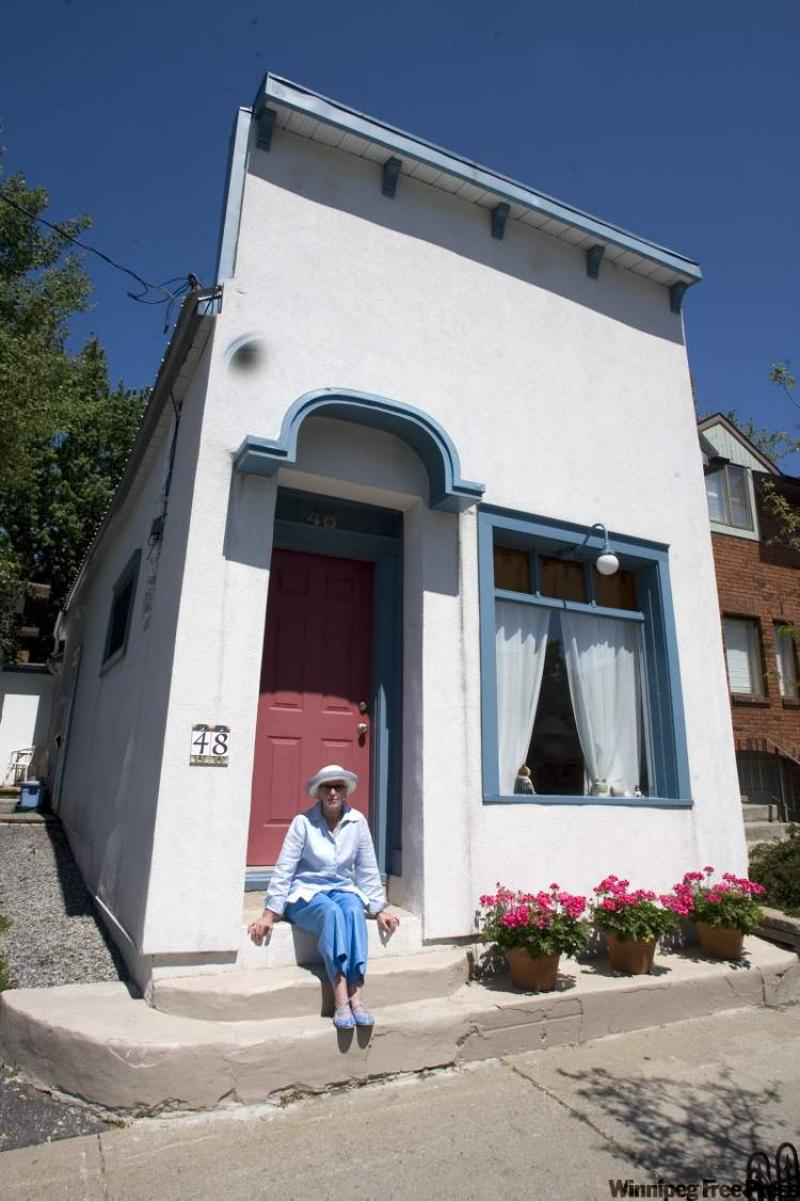
Gail McEachern lives big, below, in her charming 600-square-foot home in Ottawa.

Enlarge Image Enlarge Image icon

"I'm opposed to large homes. There's the environmental impact of extra energy for heating. It's a tremendous waste of space that people just walk through." Gail McEachern, Owner, 600-square-foot home in Ottawa

OTTAWA -- If small is the new normal in housing, as some experts suggest, a 120-year-old former barn in Ottawa is positively futuristic. Gail McEachern's house began life in the 1880s as a hay barn, morphed into a blacksmith's shop, turned into a corner store, and now serves as her home and office. Twelve feet wide, it totals just 600 square feet.

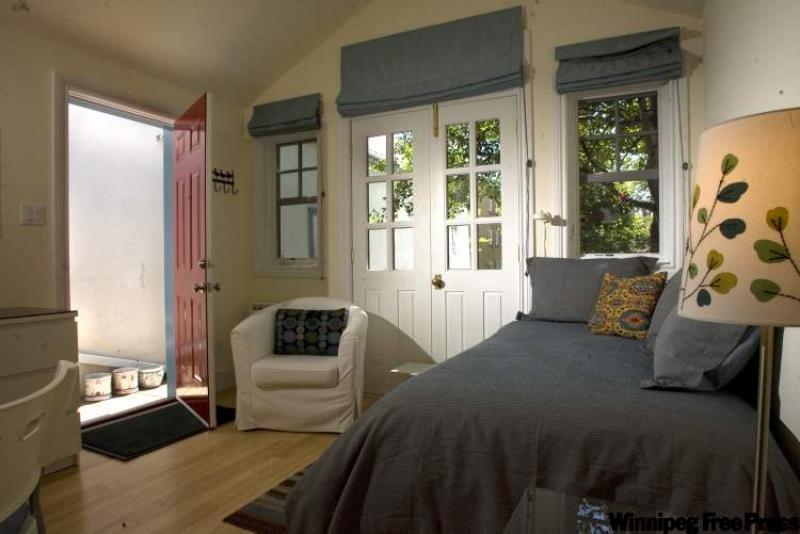
McEachern bought her tiny home in 2004. She subsequently converted the garage into a small bedroom-bathroom-kitchenette unit attached to the original home by a walkway, but the addition is used only by guests.

"I'm opposed to large homes," says McEachern, who owns Transitions in Living, which co-ordinates household moves for seniors. "There's the environmental impact of extra energy for heating. It's a tremendous waste of space that people just walk through."

What's more, bigger homes create a sense of isolation, she says, with owners having to create little pockets of cosiness they could have acquired by buying small in the first place. Besides, she adds, who needs all the extra housework that goes with a large home.

With an inevitable energy crunch coming down the pipe, soaring land costs and other factors in play, smaller homes -- though perhaps not quite as tiny as McEachern's -- loom large on the horizon, say many.

It's already happening with urban condos which are clocking in at as little as 300 square feet.

"Everyone's recalibrating," says Marianne Cusato. She's the Florida-based designer of the 1,771-square-foot, two-storey Home for the New Economy that made such a splash at the International Home Builders Show in Las Vegas earlier this year.

Someone who would have bought a 3,000-square-foot home is buying 2,400; people who would have bought 2,400 are going for 1,600 or 1,700.

Statistics seem to agree.

In the U.S., according to the National Association of Home Builders, the average size of a new home in 1978 was 1,750 square feet. By 2008, that had mushroomed to 2,520 square feet. Then, last year, for the first time since 1982, the size fell to 2,480 square feet, although the collapse of the country's housing market did make 2009 an unusual year.

U.S. builders, however, say they plan to focus on smaller homes this year. Canada does not collect such statistics, but where the elephant leads, we often follow.

Cusato sells plans for her Home for the New Economy for $750 at www.NewEconomyHome.com. She's also had so much success with the Katrina Cottage -- the low-cost, 350-square-foot midget originally designed for victims of hurricane Katrina -- that she's currently working up a slightly larger version for colder climates.

According to Cusato, ever-bigger homes, appealing for their airiness and light, were a reaction to the often-dark ranch homes and boxy split-levels of the 1950s and 60s. However, low energy costs, cheap land and a perverse hunger to keep up with Joneses meant that, before you could say Topsy, homes were becoming unwieldy castles in far-flung communities. The only way to differentiate McMansions, she says, is by adding on more.

"The cold-water shower of the 2008 financial meltdown, coupled with growing concern about the end of cheap oil for both heating and commuting, mean that's all changing," Cusato says.

She thinks the 1,200- and 1,300-square-foot homes most of us grew up in the 1950s could make a comeback. You take the massing of those 1950s houses and rearrange it to add modern kitchens and bathrooms and closets -- and yes, it could work.

But shrink too fast, says John Herbert, executive director of the Greater Ottawa Home Builders Association, and there'd probably be a revolt by the population before you ever hit 1,200 square feet.

Despite that, he sees smaller homes on the horizon.

"We've been talking about this for 20 years, but I believe we've reached the point where we'll see it start to happen within a year or two."

Among other reasons, he cites rising interest rates, the curtailment of urban sprawl in cities and a new emphasis among buyers on quality finishes rather than simple square footage.

John Kenward, chief operating officer of the Canadian Home Builders Association, points out everything from demographics to regional variances in land availability will influence house sizes.

"Is there a market for smaller homes? Yes. But it's not as though we've got some sort of golden rule that says all homes are getting smaller," he says.

Small bungalows in the 1,200-square-foot range, often aimed mostly at the singles market, are starting to crop up in cities across Canada, but these seem like behemoths next to dwellings from Tumbleweed Tiny House Company in the California community of Boyes Hot Springs.

Available either in plan or completed form, and ranging from 65 to 837 square feet, they can be seen at www.tumbleweedhouses.com. The smallest are on wheels, making them more like trailers, and feature two-burner stoves, a bar fridge and a loft bedroom accessible by ladder.

Costing anywhere from about $35 to $200 per square foot, these and other very small homes are still a niche market. The Small House Society (www.resourcesforlife.com/small-house-society) will bring you up to speed with a newsletter, links to books and other resources.

While you're browsing, have a look at www.thelittlehouse.ca. The website is dedicated to Toronto's smallest house, a 312-square-foot shrimp built in 1912. Newly renovated and energy-efficient, the media darling is still inhabited.

American architect Sarah Susanka is generally credited as a pioneer in the smaller-home movement. Author of the immensely popular series Not So Big Homes, Susanka advocates trimming one-third from the size and spending the extra money on quality finishes. Like others, she says the housing industry has been slow to respond to the economic meltdown, but is finally getting the message that small has gone mainstream.

-- Postmedia News